Wednesday, February 15, 2012

Biggest creature Once Roamed Antarctica

sauropod dinosaur
The sauropod family includes some of the main earthly vertebrates that still existed -- huge, awkward beasts weighing tens or still hundreds of plenty. And they lived all over but Antarctica, paleontologist’s thought -- until now.

Argentinean researchers have just exposed the Antarctic leftovers of a titanosaur, a plant-eating, sauropod dinosaur that leftovers one of the main creatures to still trudge the outside of the earth.

In spite of the huge size of the creatures, the proof was extraordinarily little: Just a section of spine hardly 7.5 inches long supposed to have approach from the center third of the dinosaur's tail.

These sauropod dinosaur leftovers from Antarctica improve our present information of the dinosaurian faunas throughout the Late Cretaceous on this continent," said Ignacio Alejandro Cerda from Argentinan science foundation CONICET, who was part of the squad that exposed the remains of the "lithostrotian titanosaur." The huge creature lumbered around approximately 70 million years ago.

Other significant dinosaur discoveries have been made in Antarctica in the previous two decades -- mainly in the James Ross Basin where this small piece of bone was originate, the scientists noted.

Thursday, February 9, 2012

A formidable dinosaur — with strange small ineffective arms

Dinosaur
The huge, cannibalistic dinosaur had such uneven arms that it could not have grasped anything or even injured its own face, according to a new study published in the Journal of Vertebrate Paleontology.


Tyrannosaurus rex and other well known greedy dinosaurs also had reduced forelimbs. While Majungasaurus, which lived 66 million years ago in Madagascar, was not a close T. Rex Relation, some lifestyle factors might have caused them to develop certain similarities.

"The development of small arms in greedy dinosaur’s relics a secrecy, but fossils like this are a significant clue in sympathetic the procedure," co-author Matthew Carrano, a paleobiologist at the Smithsonian Institution.

The forearm bones are only a district of the length of the higher arm bones, but would have been broad and brawny. The wrist bones, however, aren't even ossified, and the short fingers probably lacked claws.

"Only by discovering the stops foremost from 'normal' longer arms in the ancestral forms, to the small and strange ones in Majungasaurus and its close relatives, can we hope to explain the evolutionary series and its causes."

Thursday, February 2, 2012

New dinosaur, Yueosaurus Tiantaiensis, found in China

rareresource
Scientists have recognized an innovative species of dinosaur, Yueosaurus Tiantaiensis or "Tiantai Yue Dinosaur," from a fossilized skeleton originate in eastern China.


It took five Chinese and Japanese researchers more than three years of concentrated study to recognize that the frame belonged to a divide species, according to geoscientist Zheng Wenjie of the Zhejiang Museum of Natural History.

They consider it is a before unknown species of ornithischian, or "bird-hipped" dinosaur, that lived throughout the Cretaceous period a number of 100 million years ago. It had a bill, ate plants and was intelligent to run fast on two legs to flee predators, Zheng said.

At concerning 1.5 meters long and less than 1 meter high, Yueosaurus is the minimum dinosaur yet exposed in the region.

Dinosaurs of its type – bipedal, herbivorous runners known as ornithopods – were exceptional in Asia; previously, only four such species had ever been establish on the continent.

Yueosaurus is the fifth new dinosaur species to have been found in Zhejiang.

Monday, January 30, 2012

Dinosaur footpath originate in Beijing’s community


Dinosaur footpath

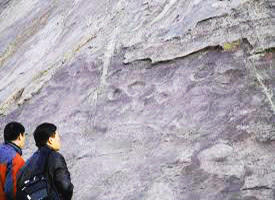
Hundreds of dinosaur footpath from the Late Jurassic (about 140 million to 150 million years ago) has been originate along the core zone of Yanqing Silicified Wood National Geopark by Zhang Jianping, a geologist from China University of Geosciences through his field work late 2011.

The tracks range in length from 15 to 60 centimeters and were laid about 150 million years ago in what is now the Yanqing Silicified Wood National Geopark, near 15 kilometers from the town of Beijing’s north suburban Yanqing county.
Dinosaurs


"As they are exceptional, high-speed theropod tracks disclose aspects of their paleoethology,” said Zhang Jianping. “The dinosaur tracks from Yanqing comprise the initial proof of dinosaurs in Beijing and as the mine continues, there could be more track findings.”

A dinosaur geopark will be built in the area where the dinosaur footpath is found, according to Yuan Guixu, director of Yanqing Tourism management. “Once the dinosaur park is finished, it will unlock to the tourists,” said Yuan.

Saturday, January 21, 2012

New species of dinosaur discovered in museum

Dinosaur Museum
Bone-bothering boffins have exposed a totally brand new species of horned dinosaur , in spite of having parts of its skull for the last hundred years.

The fossilized remains of parts of the skull of the Spinops sternbergorum were exposed in 1916 by father-and-son fossil-collectors Charles and Levi Sternberg. They thought they had establish a brand new species and sent the fossils to the Natural History Museum in London.

But the museum determined that the fossils were too little to be exhibited, so they were filed away for decades. Andrew Farke, guide author on the study that named the Spinops, said in a statement.

"My colleagues and I were enjoyably amazed to discover these fossils on the museum sill, and even more surprised when we resolute that they were a previously unidentified species of dinosaur."

The Spinops lived approximately 76 million years ago in Canada. The dinosaur was a plant-eating slighter cousin of the Triceratops that weighed approximately two tons.The primitive lizard had a solitary horn on its nose and a skinny neckline decoration that had at least two long, backward-projecting spikes as well as two forward-curving hooks, which are the sole skin that differentiate it from other horned dinosaurs.

Although Spinops' face looks very like to that of its close relatives Centrosaurus and Styracosaurus, the bony neck frill gives boffins a improved sympathetic of how this structure evolved.

"In particular, the fossils of Spinops explain the recognition of the extended frill spikes ordinary in some horned dinosaurs,"

Wednesday, January 11, 2012

Dinosaurs approaching to junior Museum of Memphis

Dinosaurs Museum

The museum announced Monday that the roving show, "Dinosaurs : Land of flames and frost," will open Feb. 11. The show is sponsored by Cordova-based Kronos power Solutions.The museum is being retrofitted -- with ramparts taken down and festivity accommodation prolonged to create liberty for what officials anticipate will be a rush in company.

"In the show world, this is measured a hit," said museum CEO Dick Hackett. "It'll have provincial magnetism."A $2 supplement will be additional to the usual $10 admittance cost throughout the exhibit's sprint through May 13.

School groups that create reservations by Jan. 31 will get an inexpensive tempo of $4.50 for each child.Along with the dinosaurs, the interactive show features a meadow investigate station, where visitors can expose fossils with brushes and make drawings of the antique reptiles, and the primitive dinosaur home, where children can wear bug costumes and discover a volcano.

The show was shaped by the Minnesota Children's Museum.Hackett said the museum has for years required to transport in a excellence dinosaur show one that doesn't now engage motionless dinosaurs that snarl and accredited Kronos with manufacture it probable.

"It's very good-looking not only to the young people, but also to the teachers and parents and adults that bring the children," Hackett said.