This was a large Ornithopod dinosaur related to Camptosaurus and Iguanodon. It is Australia's known dinosaur from skeletal leftovers. It lived for the duration of some middle Cretaceous period, about 113-97.5 million years ago
Facts
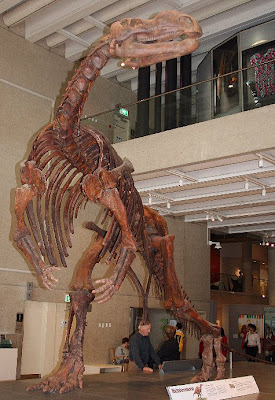
 This was a large Ornithopod dinosaur related to Camptosaurus and Iguanodon. It is Australia's known dinosaur from skeletal leftovers. It lived for the duration of some middle Cretaceous period, about 113-97.5 million years ago
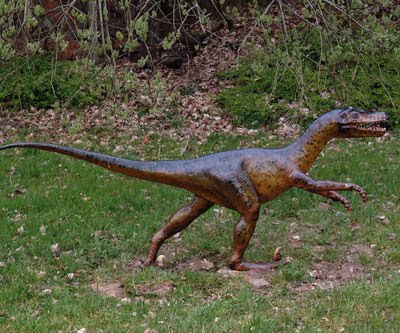
Dromaeosaurids are known throughout the Cretaceous and from North and South America, Europe, Asia, Africa, and Madagascar.
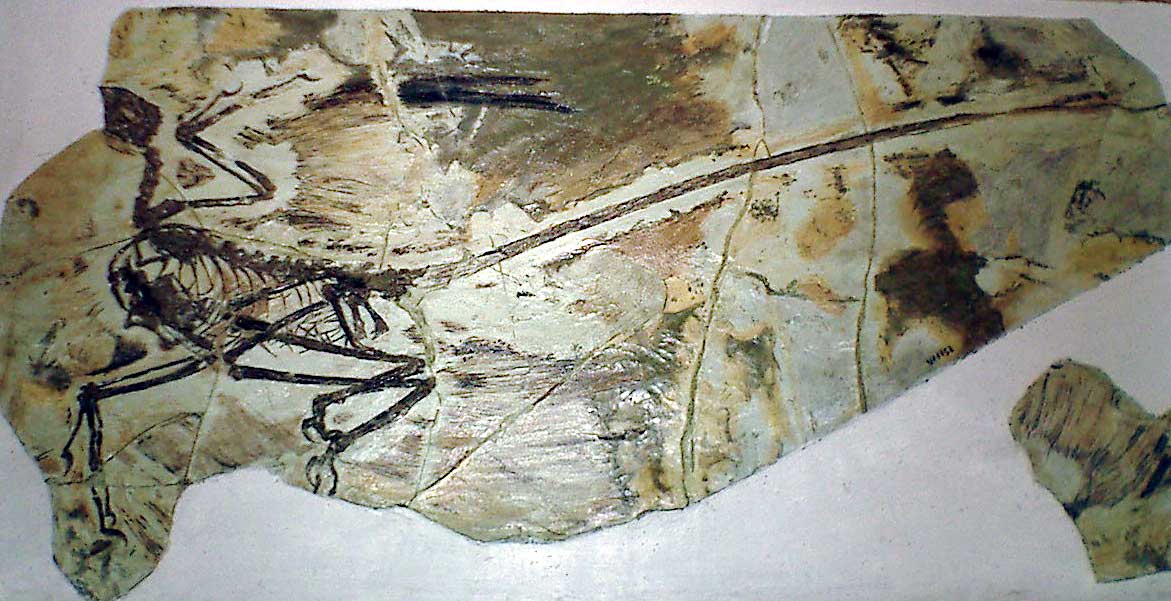
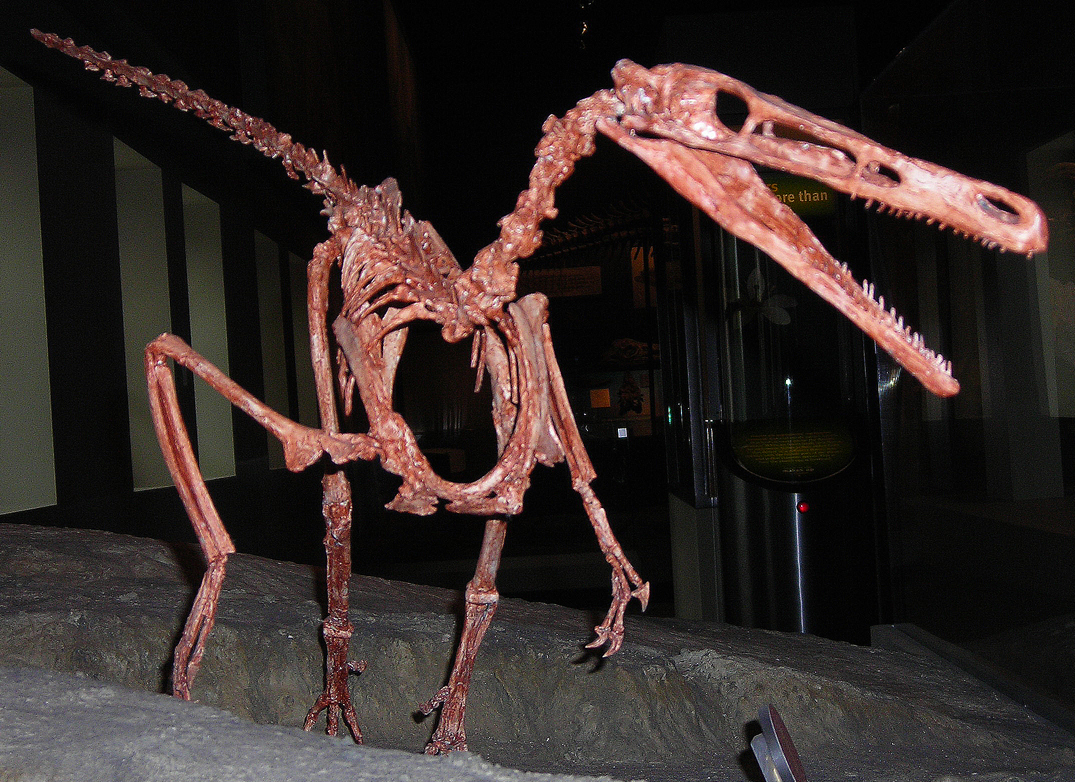
Basal dromaeosaurs (Unenlagiinae and Microraptorinae) include some crow- to turkey-sized taxa: Rahonavis of the Late Cretaceous of Madagascar (and initially thought to be a bird); Microraptor of the Early Cretaceous of China (the first eumaniptoran for which the tail feathers were known); long-snouted Buitreraptor of Late Cretaceous Argentina; and others. Not all of these were small, however. One of the most unusual of these basal dromaeosaurids is giant Austroraptor of the mid Late Cretaceous of Argentina: a long-snouted, short-armed polar bear-sized unenlagiine.
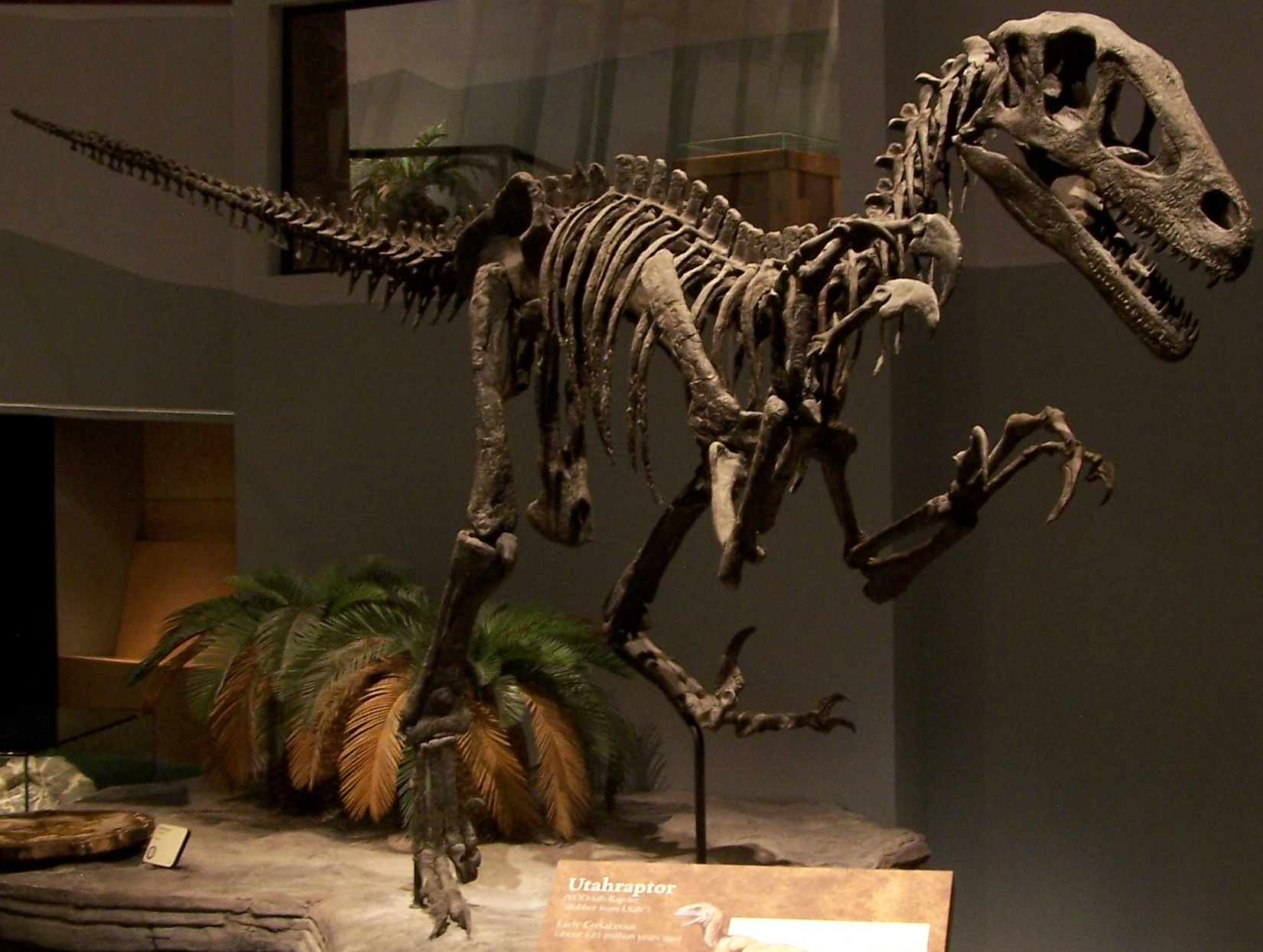
The more derived dromaeosaurids (Saurornitholestinae, Deinonychus, Velociraptorinae, and Dromaeosaurinae) form a group called Eudromaeosauria. These were coyote-to-grizzly bear sized. Well-studied examples include coyote-sized Velociraptor of the Late Cretaceous deserts of Mongolia; wolf-sized Deinonychus of the Early Cretaceous of western North America; lion-sized Achillobator of mid-Late Cretaceous Asia; and grizzly-sized Utahraptor of the Early Cretaceous of western North America, at present the largest known eumaniraptoran.
Dromaeosaurid caudals were more tightly interlocked than in typical theropods, and in microraptorines and eudromaeosaurs extensions from the chevrons and neural arches grew extremely long. The tail was thus an extreme dynamic stabilizer.
Some basal dromaeosaurids had elongate metatarsi (indeed, they have a primitive form of the arctometatarsus), but the majority had relatively short stout metatarsi and tibiae. This suggests that they had sacrificed speed, perhaps for agility (better able to turn quickly while pursuing prey or escaping predators, especially with the help of the stiffened tail). Despite certain books and movies to the contrary, the dromaeosaurids show no signs of being speed specialists.
While the small primitive forms may have eaten small prey (skewering it with the sickle claw in the manner of modern secretary birds, perhaps), the larger forms were predators of dinosaurs. The "Fighting Dinosaurs" specimen of Velociraptor shows it in combat with Protoceratops, the hands used to grasp the head of the herbivore while the sickle claw was ripping into the throat: very similar to the attacks used by large cats. Some (contraversial) evidence suggest that Deinonychus may have attacked the much larger iguanodontian Tenontosaurus in groups (packs or mobs).
Note that the sickle claw may have also been used to climb: either up trees, or up the sides of victims! Additionally, they may have been used to pin smaller prey down on the ground while the jaws and hand claws were used to kill it.

At least some of the early forms may have had limited flight capability: indeed, they show somewhat better flight adaptations than Archaeopteryx! The majority of dromaeosaurids, however, probably lived their lives on the ground (although hiding/sleeping in the trees may have been possible, especially for juveniles).
In the Early Cretaceous dromaeosaurids were major mid-sized predators, and in the deserts of Late Cretaceous Asia they were among the largest carnivorous dinosaurs present. However, with the rise of the tyrannosaurids large-bodied dromaeosaurids disappear in the Northern Hemisphere, and the Late Cretaceous dromaeosaurids of Asia and North America were fairly small animals.

Phylum:Mollusca Class: Gastropoda
Nudibranchia
Nudibranchs are members of the mollusc family; basically they’re snails without a shell.
Description
Nudibranchs are characterised by soft bodies with bright colours and striking patterns to deter predators. They are often called sea slugs. There are more than 3000 species of nudibranchs worldwide! Adults are from 2 to 60 centimetres in length. Nudibranchs have chemical sensors called rhinophores on their head which they use to smell and taste chemicals in the water to help them find food. Nudibranchs have (head) tentacles, which are receptive to handle, flavor, and smell. Club-shaped rhinophores sense odors.
Habitat
It live at all depths of salt water, but reach their greatest size and variation in warm, shallow waters.
Reproduction
It has a set of reproductive organs for both sexes, but they can infrequently fertilize themselves.It naturally drop their eggs inside a jellylike spira
Nudibranchs are hermaphrodites with a set of male and female reproductive organs.

Diet
Most nudibranchs are carnivores, feeding on sponges, hydroids, bryozoans, other sea slug species, or, occasionally they are cannibalistic and prey on members of their own species. Other groups feed on tunicates, barnacles, or anemones.

Alvarezsauroidea is a recently discovered, highly specialized group of maniraptoran theropods. Haplocheirus is the oldest known form, from the early part of the Late Jurassic of China; otherwise, the remaining alvarezsauroids (collectively the Alvarezsauridae) are from the Late Cretaceous. Alvarezsaurids are known from South and North America, Europe, and Asia. They have numerous bird-like features, and were once thought to have been specialized flightless birds. Alvarezsaurids range in the chicken-to-rhea sizes.
Alvarezsaurids have small beaky skulls with tiny teeth and hands in which the thumb is much more powerful than the other fingers.
In the Cretaceous Alvarezsauridae, the foprelimbs are further transformed into bizarrely poweful arms with a huge thumb claw and exceedingly small digits II and III. The alvarezsaurids have a backwards pointing pubis. Unlike the therizinosauroid and ornithischian situation, this backwards position of the pubis is more likely associated with changes in the locomotory muscles towards knee-driven power from the ancestral tail-and-femur driven power. Only a little is known of Alvarezsaurus itself (the basalmost form); somewhat more is known for the more derived Patagonykus and Achillesaurus (all from South America).
The highly derived Parvicursorinae (also called "Mononykinae"), in contrast, are known from many excellent specimens. The best studied are the Asian taxa Mononykus, Parvicursor, Xixianykus, and Shuvuuia. (However, North American forms such as Albertonykus are known). Parvicursorines have an extreme version of the arctometatarsus, in which the upper portion of metatarsal III is entirely missing. The parvicursorines show numerous cursorial adaptations, but these were almost certainly defensive. They seem to have been insectivores, and their forelimbs may have been used to batter into ant and termite nests. They have been found from deserts to well-watered environments.
The remaining maniraptorans are the oviraptorosaurs and the eumaniraptorans. These two groups are united by several important characteristics:

It is a large theropod dinosaur, known as ornithomimosaurian, which lived in southern Mongolia, during the late Cretaceous Period (around 70 million years ago)
CharacteristicsThe structure of its arms is similar to other dinosaurs of this group. This is the largest ornithomimosaur. The most well-preserved parts of Deinocheirus are its forelimbs, which measured long, with long claws.It had a Long arm with three long fingers on each hand
Facts Two long forelimbs and bits of ribs and vertebrae--that were dug up in southern Mongolia in 1970.

This is the group of dinosaurs that lived in southern Australia in the Cretaceous Period. While Hypsilodontids have been found worldwide, scientists have discovered a richness of species in southern Victoria. Being close to the South Pole, the climate there was quite cold, with long dark winters when there was no sunlight. Hypsilodontids may have exploited the near polar conditions better than other species. Fossils of about twelve species of Hypsilodonts have been found along the south coast of Victoria, including sites near Cape Otway.
The Hypsilodontid dinosaurs were Ornithopods, and were quite small, only up to 1 metre in size (about the size of a present day wallaby). They walked and ran on their hind legs, with a long neck, and a long balancing tail. They were herbivores, eating low growing vegetation such as the ferns and mosses that grew in the cold climate. Hypsilodontids had very large eyes and ability to see in poor light. This would have allowed them to find food during the long, cold winters.