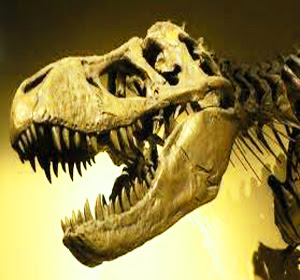
Showing posts with label Dinosaur Skeleton. Show all posts

Thursday, February 2, 2012

New dinosaur, Yueosaurus Tiantaiensis, found in China

rareresource
Scientists have recognized an innovative species of dinosaur, Yueosaurus Tiantaiensis or "Tiantai Yue Dinosaur," from a fossilized skeleton originate in eastern China.


It took five Chinese and Japanese researchers more than three years of concentrated study to recognize that the frame belonged to a divide species, according to geoscientist Zheng Wenjie of the Zhejiang Museum of Natural History.

They consider it is a before unknown species of ornithischian, or "bird-hipped" dinosaur, that lived throughout the Cretaceous period a number of 100 million years ago. It had a bill, ate plants and was intelligent to run fast on two legs to flee predators, Zheng said.

At concerning 1.5 meters long and less than 1 meter high, Yueosaurus is the minimum dinosaur yet exposed in the region.

Dinosaurs of its type – bipedal, herbivorous runners known as ornithopods – were exceptional in Asia; previously, only four such species had ever been establish on the continent.

Yueosaurus is the fifth new dinosaur species to have been found in Zhejiang.

Wednesday, December 28, 2011

Dinosaur fossil originate in Alberta in 1916 a new-fangled type

Dinosaur fossils

After meeting dirt on a ledge for more than 90 years, two before unnoticed skulls have been recognized as an original dinosaur type which once roamed the plains of southern Alberta.

The skeleton of the recently named Spinops Sternbergorum were at first exposed southeast of Calgary in 1916 by a father and son science squad.

Charles and Levi Sternberg — who are now privileged in the original dinosaur's first name — sent two fractional skulls to London's Natural History Museum and even spoke a guess that the bones might point to a before unidentified dinosaur.

But those investigative the skulls at the British museum at the time disagreed labeled the fossils as "refuse" and the skeleton were punctually beyond for years.

Virtually a century afterward, a squad of global scientists rummaging through the museum's set of skeleton stumbled ahead the skulls, re-examined them intimately and set up that they belonged to a kind unidentified awaiting now.

"We had no plan that it was out there, that's why it was so astonishing to find it," said Andrew Farke, guardian at California's Raymond M. Alf Museum of Paleontology and guide author of a learn which named the original dinosaur.

"When many colleagues and I dotted these specimens in the set, we right away knew it was amazing dissimilar."

The discovery of the original kind comes at a moment when scientists' facts of horned dinosaurs is "rising exponentially," said Farke, who further that Canada has a vital place to take part in the deepening of our information on the creatures that roamed the ground millions of years ago.

"Over the earlier 20 years or 30 years there's been an actual rebirth of paleontology in Alberta," he said. "I think Alberta is going to trait actually highly in the paleontology reports more than the after that little years."

Tuesday, August 2, 2011

Era of Thalattosaur Skeleton

Thalattosaur Skeleton

Thalattosaurs an ocean lizard which lived during the mid-late of Triassic period Belongs to a group of marine reptiles. Its fossil skeleton which was 20 million year old was found in Alaska along the sea shore of a low tide near Tongass National Forest. It is very unique that one could not expect to see on a day at the beach.
According to International Business Times, Alaskan scientists determined that the skeleton was of a rare marine creature and being sunken in water and rocks, called Thalattosaurs. The last survive of this creature was from about 200 million years ago.
The next is about scientists who are continuing to dig out the remaining of the fossils along with finding the skull which may be hidden deep into the beach rocks. They were able to excavate two huge slabs of rocks with fossils embedded. The digged slabs were sent to a museum lab in order to chip out the fragile bones in trust of enlightening one of the most complete Thalattosaur skeletons yet discovered.
Dr Jim Baichtal, a geologist and part of the discovery team, said The Daily Mail that finding the skeleton was a total surprise.

Dinosaur Skeleton